Voiles and net curtains for the first layer, curtain fabrics and blackout for the second, velour and jacquard for depth of colour, upholstery and flame-retardant fabrics for projects. Fabrics up to 330 cm wide — full-height curtains with no horizontal seam.
Search by name, article code or type. Each card carries the fabric's data sheet: composition, weight, light fastness, abrasion resistance, care and every colour in stock. The price is per running metre including VAT, without tailoring or the track.
The catalogue is arranged not by fashionable collections but by how a fabric behaves at the window.
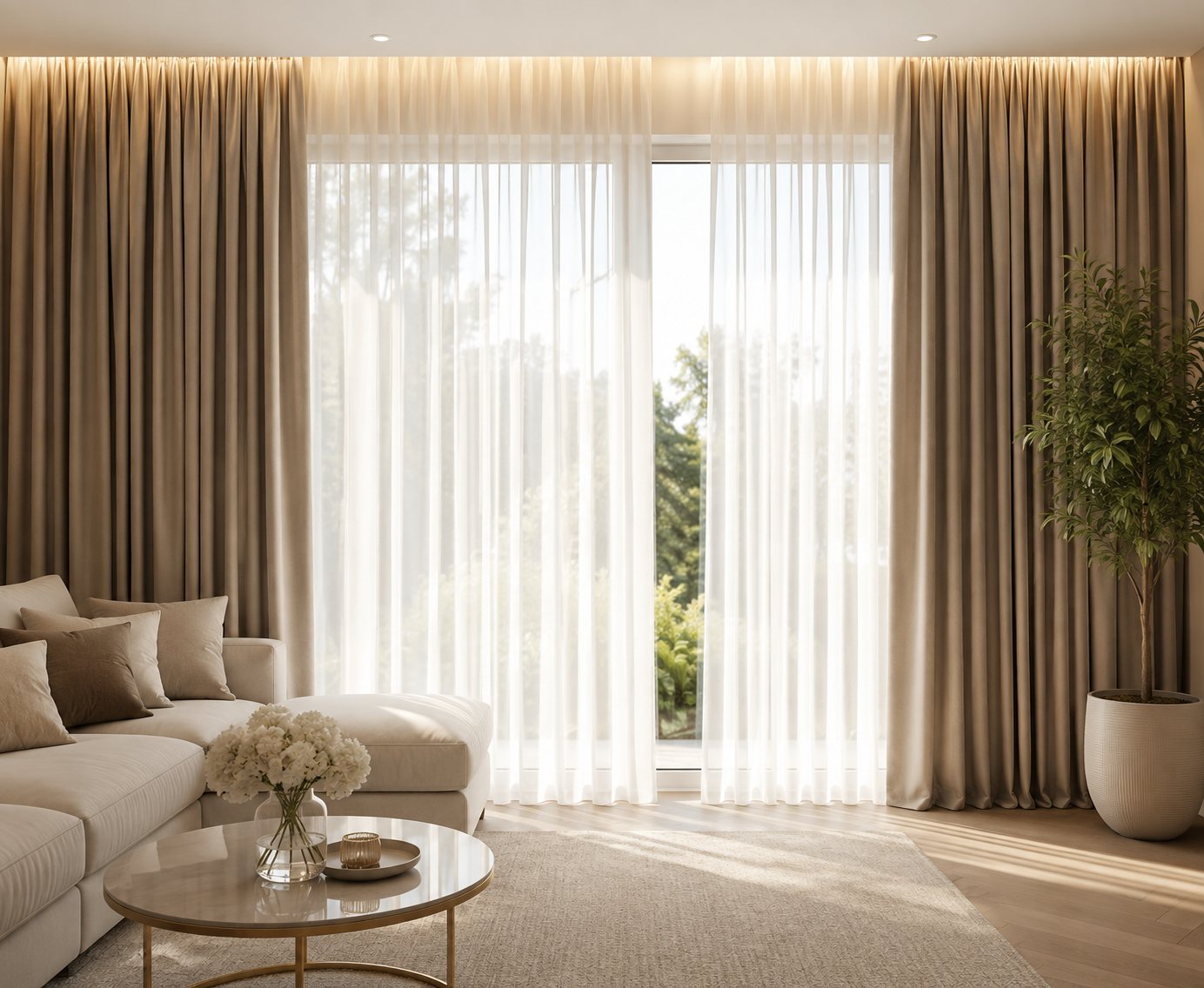
Voiles and net curtains let the light through and keep you out of view by day. Fabric widths up to 330 cm mean full-height curtains with no horizontal seam. Light, 40–90 g/m².
Drape curtains hold their shape and provide the colour. Blackout and dimout hold back the light: blackout almost completely, dimout softens it. For a bedroom or a nursery it is nearly always blackout.
Velour and velvet — 400–600 g/m², deep colour and a weight that falls beautifully. Jacquard — the pattern is woven rather than printed, so it does not wear away over time. Naturals — linen and cotton blends, with a lively, uneven surface.
Upholstery fabrics are Martindale tested — the data sheet gives the number of cycles. Flame-retardant fabrics are required in public spaces: hotels, offices, halls. Some can be washed with water.
Every fabric in the catalogue has our own name and an article code in the form F-2015, and the colour a number: F-2015-07. That is deliberate: quote the article code to your account manager and you will get exactly that fabric in exactly that colour, with no confusion between twenty similar beiges.
The specifications in the data sheet are not our words but the manufacturer's figures: composition, weight in grams per square metre, light fastness on the eight-point scale, the number of Martindale cycles, shrinkage and the care instructions. The fabrics are European made.
We do the sewing and fitting ourselves — tailoring, tape, track and installation are quoted separately from the metreage. A professional survey with the samples in hand: the colour on a screen and the colour in your own light are two different things.
Four steps, and you do not have to measure anything yourself.
1. Choosing. Mark the fabrics you like in the catalogue — note the article codes or send them to us on WhatsApp. Work out a rough cost in the calculator.
2. Survey. Our fitter arrives with samples of the fabrics you chose, measures the windows, checks the fixing and the height and shows you the fabric in your own light.
3. Quotation. An exact quote: the metreage according to the fullness ratio, tailoring, tape, track, installation. You pay nothing up to this point.
4. Tailoring and installation. We sew, deliver and hang. Two-year guarantee.
Installations on FENSTORA projects — tap a photo to open it full size.
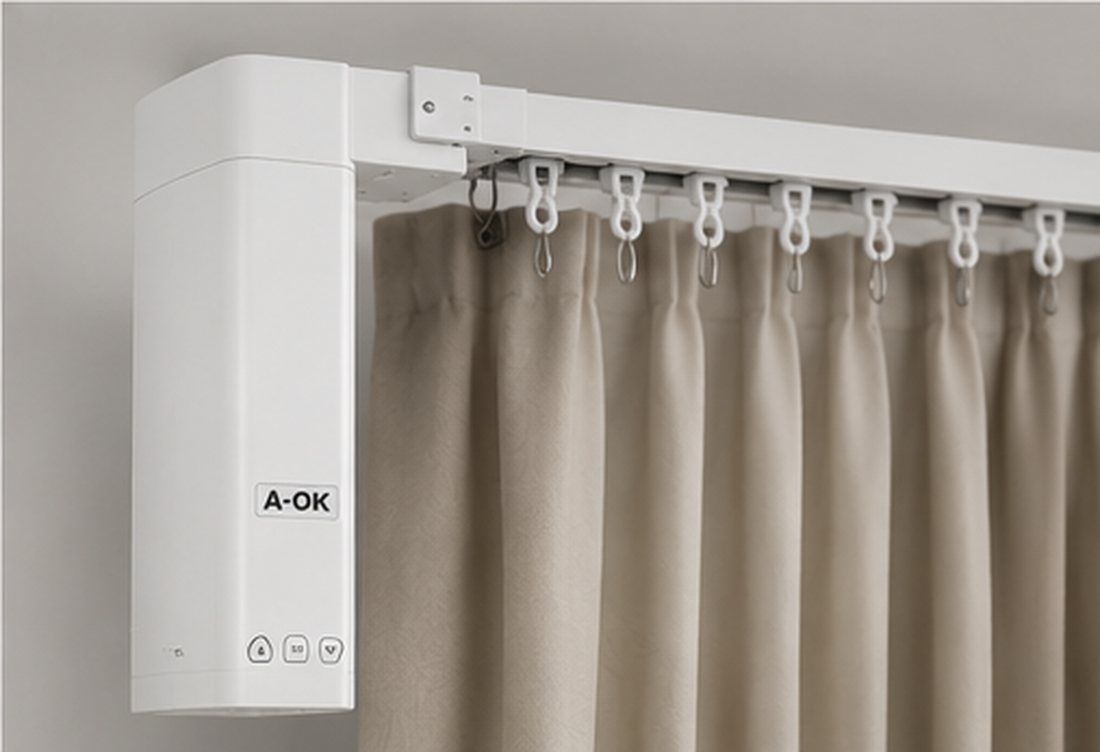
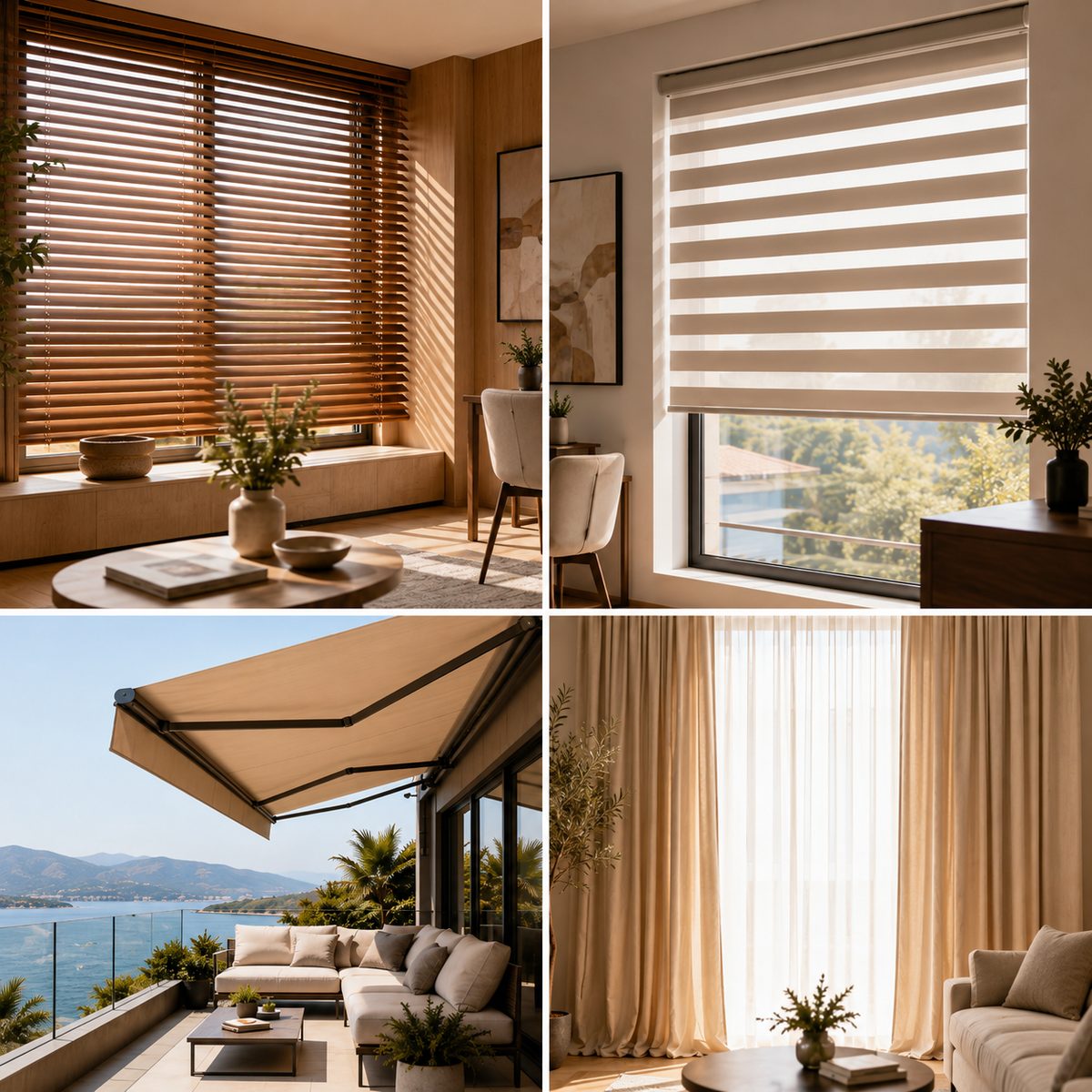
Fabric needed = track width × fullness ratio. A light wave takes 1:1.5, dense drapery 1:2.5–1:3. The calculator on the curtains page works out the metreage and the cost for you — just enter the track width and the height.
The fabric only, including VAT. Tailoring, tape, track and installation are quoted separately — which is fairer, because tailoring depends on the fullness and the height, not on the metreage.
Yes, and it is an essential step. Our fitter brings samples of your chosen fabrics to the survey. A monitor renders colour differently from fabric in your hands in your own light.
It is our fabric code, and the digits after the hyphen are the colour number. Quote it to your account manager and we will find exactly the fabric and the colour you chose.
Blackout or dimout for the second layer plus a voile for the first. Blackout holds back the light almost completely, dimout softens it — if you like waking up to daylight, dimout is enough.
Yes — flame-retardant fabrics and upholstery fabrics with a confirmed Martindale test. The card shows the number of cycles and the flame-retardancy mark.
Our fitter will bring samples of your chosen fabrics to your home or office and measure the windows. A professional survey; installation follows the survey.